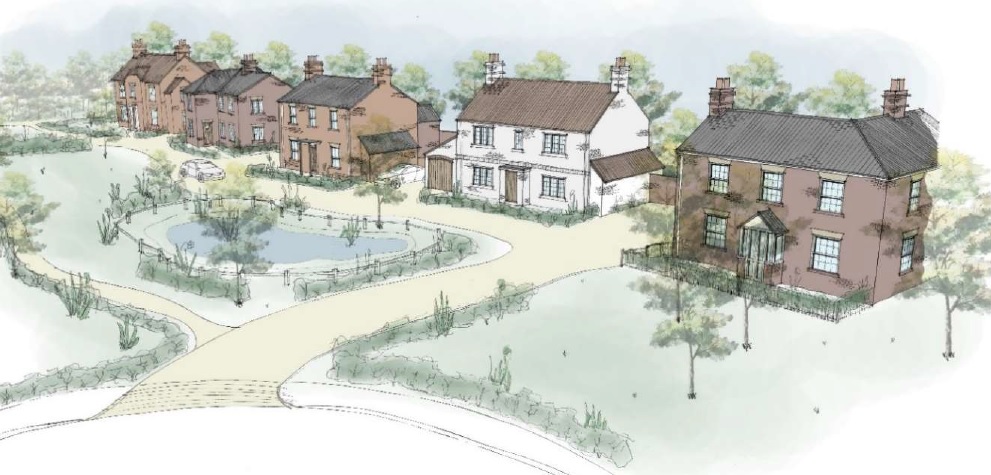
At LVA, we passionately believe in the need to provide more of the ‘ right houses in the right place’. We may disagree with many elements of the Government’s and Planning Authorities’ methodology in delivering the requirements, but that doesn’t alter the need that exists.
The media abound with tales of valiant local interest groups fighting against developments in their towns, villages or back yards. Perhaps the perception of the older privileged generations has been influenced by the industry not delivering the ‘right houses in the right places’. This does need to be addressed and we believe we are doing our bit to help.
It may be reasonably rare for the media to offer a balanced view on why we need more of the right houses as it isn’t always popular. This article by Robert Colville of The Sunday Times sets out rather well, we think, the arguments, whilst including facts and viewpoints which are not always considered.
Robert Colville The Times 21st January 2023
We live in an era of fake news and alternative facts. You can find people to tell you we didn’t land on the moon. That the vaccines killed more people than the virus. Craziest of all, that Britain doesn’t have a housing crisis.
As regular readers will know, I’m a bit of an obsessive on this point. If my editors would let me, I’d end every column with a plea to build more houses, just as Cato the Censor ended every speech by nagging the Roman senate about the need to destroy Carthage, until his colleagues finally gave in and razed the place to the ground.
Given how toxic the debate about housing and housebuilding has become, it’s useful to go back to basics. So I asked my colleagues at the Centre for Policy Studies think tank to produce the definitive explanation of why we need more homes. The report comes out tomorrow. And, God, it’s depressing.

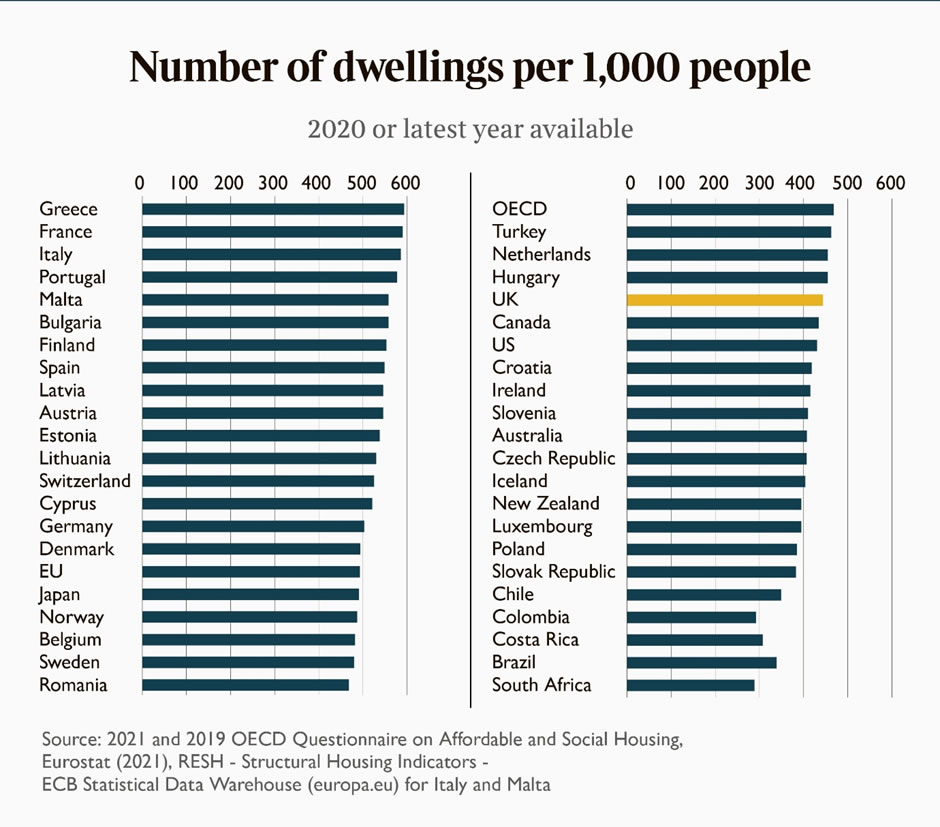
The overall story is pretty simple. In the years after the war we built a lot of homes. Then we stopped. In the three decades before 1990 we built roughly 7.5 million homes. In the three after it was 3.3 million. Even including conversions, extensions and so on, the rate at which we expanded the housing supply roughly halved, even as the population soared. As a result, the UK now has fewer homes per head than almost anywhere else in Europe.
But it’s not just about the number of homes. Because we haven’t made enough land available for housing — the latest statistics show that residential buildings cover just 1.3 per cent of England’s land area, vs 4.9 per cent for gardens, 20.1 per cent for lakes and forests and 63.1 per cent for agriculture — the homes we do build have shrunk dramatically. They are now 20 per cent smaller than they were in the 1970s — in fact, they are the smallest in Europe. They have fewer bedrooms than they used to (more than half have one or two) and fewer rooms, full stop. They are far more likely to be flats. More than half are too small for the needs of the people who buy them.
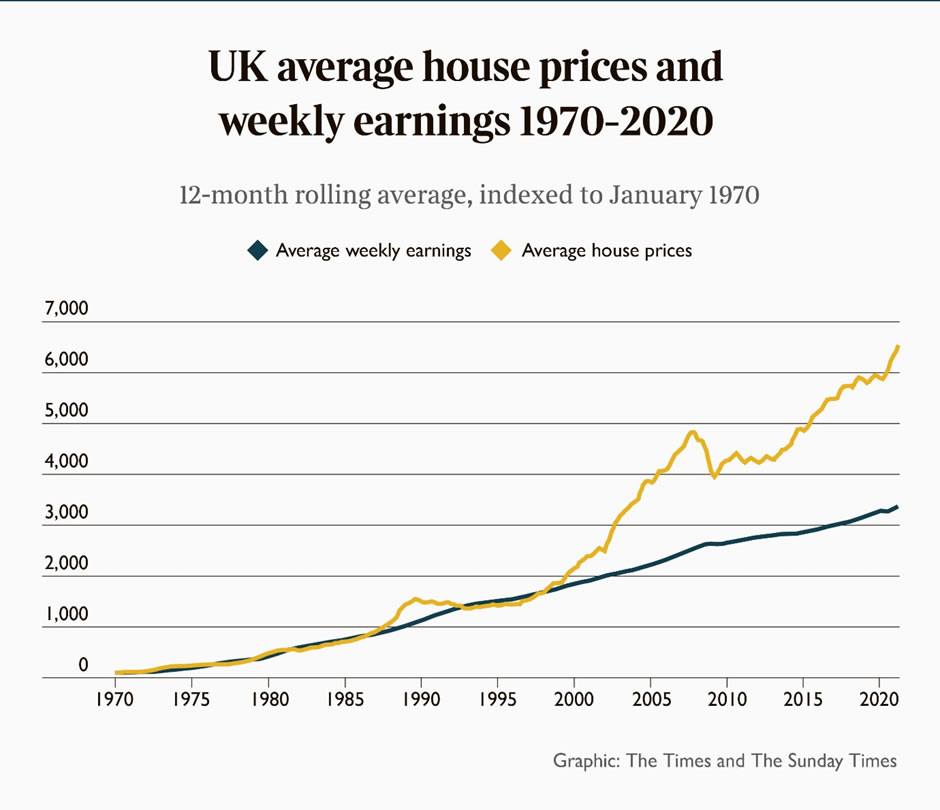
It didn’t have to be like this. Countries like France have built millions more homes than us. And homes there are far, far more affordable. Overall, in the time it took European house prices to double, ours trebled. And rents have surged too. In the old days, private renters spent roughly 10 per cent of their income on rent, or 15 per cent in London. Today, those figures are roughly 30 per cent and 40 per cent.
It’s a one-two punch: you can’t afford to save for a house, which you can’t afford anyway. No wonder the number of young people still living with their parents has gone up by more than a million. Or that we spend £30 billion a year on housing benefit — galactically more than any other country — so that poor people can afford to live in our stratospherically expensive homes.
Activists like Rosie Pearson, the “Queen of the Nimbys” profiled in The Sunday Times before Christmas, claim we are building too many homes. That’s absolute nonsense. But even if they had their numbers right, they would still be wrong. Because they ignore the huge backlog we have built up from decades of under-building.
But there is another species of housing denier out there, not least on the parliamentary benches. These are people who admit we do need houses but argue that we can build them purely on land that has already been developed — “brownfield” rather than “greenfield”, in the jargon.
I love the idea of prioritising brownfield. We should absolutely take the vacant shops that litter Britain’s high streets and turn them into homes and flats, simultaneously reviving our town centres and easing the pressure on greenfield land. Likewise, there are huge swathes of our cities, especially London, that could be renovated with denser housing.
But the overall numbers just don’t stack up.
The most obvious point is that we don’t just use brownfield sites for homes: we also need that space for shops and offices and warehouses and laboratories and all the rest of it. Because of these rival uses, you need to pay more for the land. You need to cover the cost of cleaning it up. Because it gets built out more slowly, you need to issue more planning permission to get the same volume of housebuilding. Above all, brownfield is not evenly distributed. There’s a lot of it in the north, where the factories used to be, but not much down south, especially in rural areas.
In fact, we don’t need to look at the statistics to understand that brownfield can’t save us; just recent history. When Labour came to power in 1997, it brought in a “brownfield first” policy. But council after council interpreted this as “brownfield only”. The result was that building on greenfield plummeted — taking overall housing delivery with it.
You can make all these arguments to Tory MPs, and they will respond with a simple point: building houses may be necessary, but it sure isn’t popular. But this is the final myth that the CPS paper debunks.
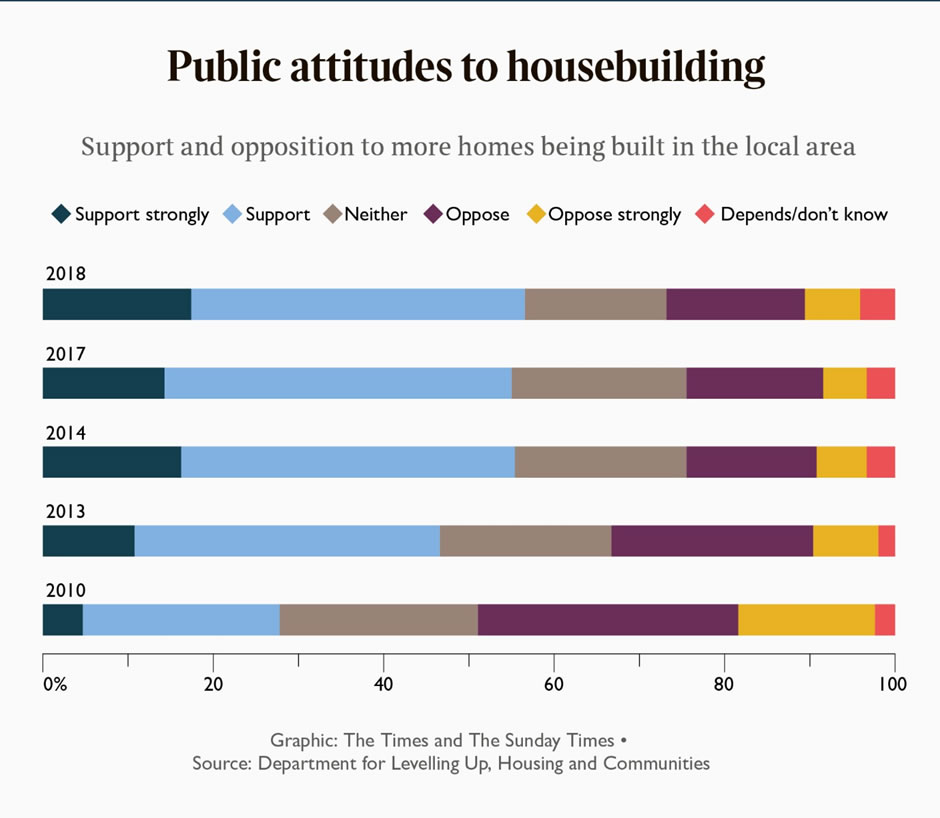
It’s true that many people oppose excessive housebuilding. But the picture painted recently by the academic Ben Ansell, who sees the British countryside as a sea of nimbyism, simply isn’t true. In a recent survey by Ipsos people agreed by 69 per cent to 9 per cent that there was a housing crisis. By 55 per cent to 17 per cent they agreed that we need to build a lot more homes to solve it. And by 49 per cent to 22 per cent they favoured building more homes in their area.
The figures become even more encouraging when you add a bit of nuance. In YouGov polling in 2017 the numbers backing and opposing a large number of new homes in the local area were roughly even. But there was strong support for building a “moderate” or “small” number of new homes. And the idea of building no new homes at all was about as popular as Prince Andrew.
I appreciate that I’m sounding like a scratched record here, but this is a hugely important issue, central to the life chances of the younger generation. Building homes is good for society. It’s good for the economy. It’s good for the Tory party. And building even fewer of them will be catastrophic for all three. Carthago delenda est. Plus tectorum aedificandum est.
We at LVA believe in building homes, as well as the additional benefits that are achieved in local communities in which they are delivered. However, whilst delivering homes is of huge benefit to the economy, and critical to solving the ongoing housing crisis, the key for us is building the Right Homes in the Right Places.
7.3.2023